 by
by 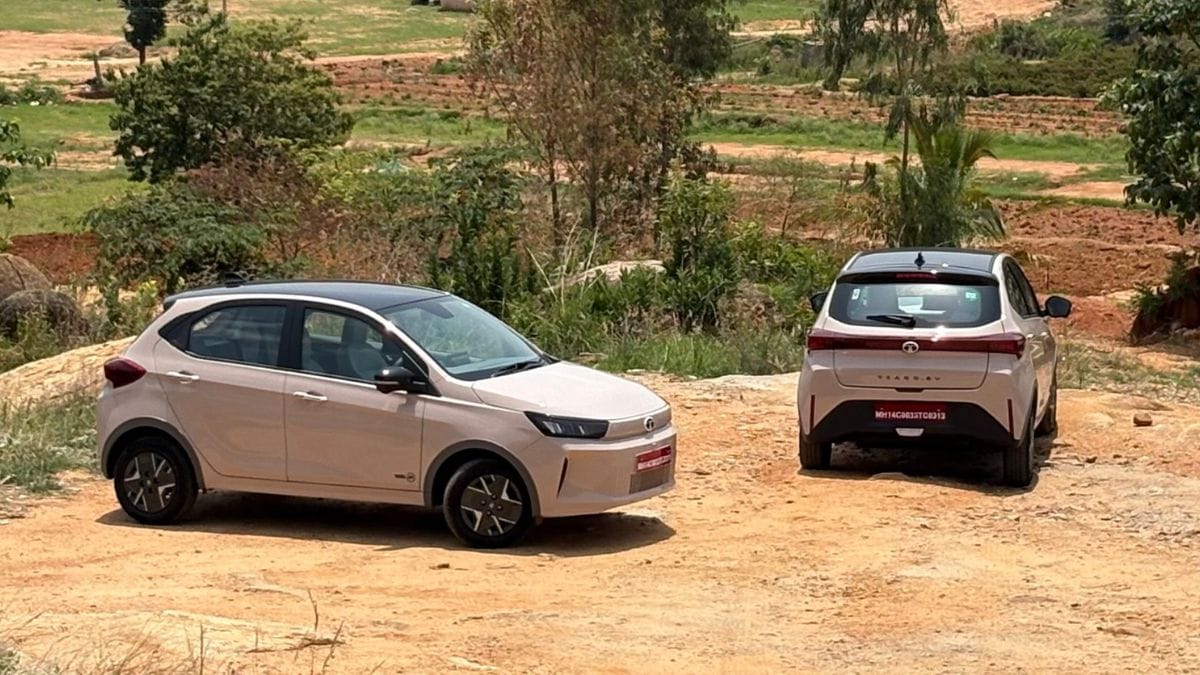
The Tata Tiago EV: A Practical Choice for Urban Commuting
The Tata Tiago EV has been positioned as an accessible electric hatchback for the Indian market, but it's important to note that this model isn't entirely new. After several years on the market, it has received a refreshing update that enhances its modern appeal, both inside and out. The infotainment system now mirrors those found in other Tata vehicles, while the seats and dashboard feature light-grey fabric that creates a spacious, inviting atmosphere. A notable interior change is the new steering wheel, adorned with the ‘Tata.ev’ logo and finished in matte rather than gloss.
On the exterior, the Tiago EV sports redesigned headlights and a new front profile, giving it a contemporary look, although some might find the design reminiscent of a barcode. However, the crux of any electric vehicle lies in its battery and performance. Despite the aesthetic enhancements, the Tiago EV retains its existing battery options of 19.2 and 24 kilowatt-hours, which may initially seem limiting but can actually be advantageous.
The batteries have been improved for faster charging, promising a range of 100 kilometers in just 18 minutes with a 30-kilowatt fast charger. The 19.2 kWh variant has a certified range of 226 kilometers, while its real-world range, based on Tata Motors' C75 standard, is around 150-160 kilometers. The larger 24 kWh battery offers a certified range of 285 kilometers and a C75 range between 200-220 kilometers. During a drive from Bengaluru to Hyderabad at a speed of 70-90 kilometers per hour, I averaged around 120 watt-hours per kilometer, translating to a potential 200-kilometer range, with urban driving likely yielding even better results.
While the Tiago EV's top model lacks paddle shifters for adjusting regenerative braking, drivers can use buttons on the central console. Most users might prefer to maintain a consistent level of regeneration, but I enjoy varying it according to the driving conditions. The question of whether the Tiago needs a larger battery is easily answered: it does not. Designed primarily for urban commuting, its compact size allows for a lighter, more dynamic driving experience.
The smaller battery also means a smaller motor, with the 19.2 kWh version producing 61 horsepower and the 24 kWh version generating 74 horsepower. Its top speed is capped at 120 kilometers per hour, which is more than sufficient for city driving and aligns with legal limits on India’s expressways. For most urban commuters, daily travel often falls well below 50 kilometers, making the Tiago's range more than adequate. While some may venture on longer drives, charging infrastructure along major highways is becoming increasingly robust, though it's wise to verify charging availability beforehand.
Moreover, the Tiago EV's smaller battery helps keep its price competitive, with the top-spec 24 kWh Creative+ variant priced at Rs 9.99 lakh and the base 19.2 kWh Smart variant starting at Rs 6.99 lakh. Tata also offers a Battery-as-a-Service option for Rs 4.69 lakh. Although the Tiago EV is more expensive than its petrol and CNG counterparts, the gap narrows due to lower road tax and registration fees for electric vehicles in many states. It’s important to note that while the Tiago EV costs about a rupee per kilometer with home charging, petrol and CNG versions also remain quite efficient, though rising fuel prices are making electric options increasingly appealing.
If I were in the market for a small urban vehicle and had access to home charging, I would certainly consider the Tata Tiago EV. Unlike the MG Comet, its only real rival, the Tiago features four doors, a proper rear seat, and enough space for luggage. With Tata Motors gaining traction among Indian consumers, the Tiago EV could very well become their next success story.
Comments