 by
by 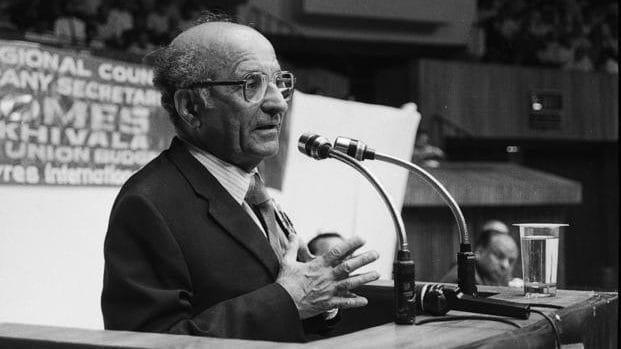
The Importance of Remembering the Emergency: Nani Palkhivala's Perspective
Nani Palkhivala viewed the Emergency as a critical juncture in India's history, marking a concerted effort by Indira Gandhi to curtail civil liberties. He noted that approximately 1.66 lakh people were imprisoned during this tumultuous period, including notable figures like Jayaprakash Narayan, Morarji Desai, and Kuldip Nayar. The staggering scope of oppression was later corroborated by the Shah Commission of Inquiry, established after the Janata Government came to power in 1977, which uncovered the grim realities hidden beneath slogans of “national renewal” and “discipline.”
The Commission's findings revealed that facilities meant for 1.83 lakh inmates were overcrowded with over 2.2 lakh prisoners, including 1.2 lakh who were still awaiting trial. A coercive sterilization program shattered the hopes of parenthood for more than a crore individuals, resulting in over 1,700 fatalities. Meanwhile, parliamentary debates and court rulings faced censorship, and newspapers were categorized as “friendly,” “neutral,” or “hostile” based on their content.
Palkhivala recognized the unchecked power of the state, which ruthlessly suppressed dissent. His insights highlighted a crucial point often overlooked by constitutional experts: the preservation of liberty doesn't rely on the goodwill of those in power, but rather flourishes when authority is distributed across multiple institutions. During the Emergency, the regime sought to justify its actions while fear gripped the nation, fueled by state coercion.
In 1978, the government enacted the 44th Amendment to the Constitution, implementing safeguards against future abuses of emergency powers. This amendment mandated that declarations of national emergency based on ‘war’, ‘external aggression’, or ‘armed rebellion’ would now undergo judicial review. Fundamental rights, including the right to life and personal liberty, became inviolable and could not be suspended, even under emergency conditions.
Palkhivala's critique extended beyond mere condemnation of the regime; he identified inherent flaws in India's civic and political culture that could jeopardize democracy. He pinpointed three critical weaknesses: a deficiency in public spirit, a lack of justice and fairness, and a shortage of moderation and tolerance. These vulnerabilities posed a risk of repeating history if left unaddressed.
For Palkhivala, it was vital to keep the memory of the Emergency alive to avert its repetition. He famously cautioned, “Those who cannot remember the past are condemned to repeat it.” His warning remains relevant today, as the Emergency serves as a stark reminder of how easily constitutional freedoms can erode when institutional checks are weakened and public vigilance diminishes.
According to Palkhivala, the strongest defense against another Emergency lies not in revising Article 352, but in nurturing a citizenry that cherishes freedom and remains vigilant against threats, regardless of their origin. The events of Spring 1977 reaffirmed India’s commitment to liberty at a significant cost. As long as the lessons of the Emergency are remembered and embraced by future generations, the preservation of constitutional democracy will remain robust.
Comments