 by
by 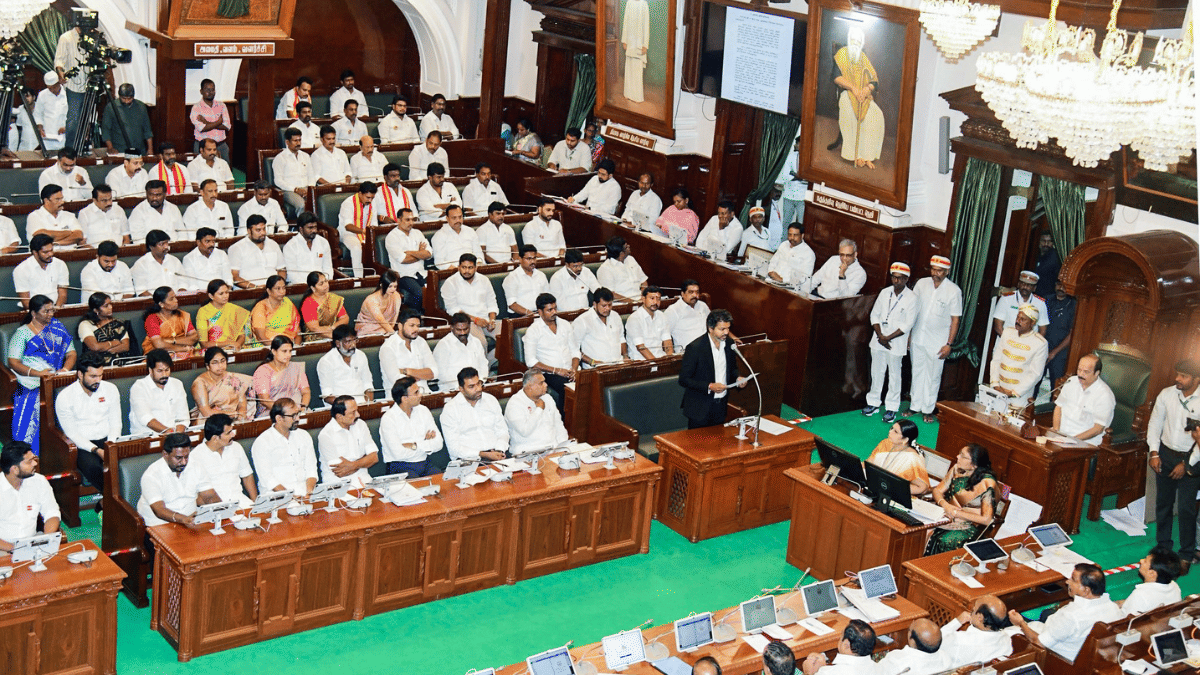
Vijay Unleashes Criticism on DMK While Highlighting Activism Record in Assembly
Chief Minister Vijay took aim at the DMK during a recent Assembly session, citing their history of dynasty politics. He recalled how, in the past, leaders like Anna and MGR prioritized the common man, asserting,
“Now, in 2026, Vijay’s government is for common people. Our politics is not about giving importance to one family, but to each family in Tamil Nadu.”He accused the previous government of corruption, claiming,
“TVK government knows how to serve people but we don’t know how to siphon off public money.”Vijay contrasted allegations of past financial misconduct with his administration's focus on integrity.
Addressing the DMK's claims about their support for TVK's government formation, Vijay insisted that their success stemmed from public backing and ally support, not from the opposition's actions. He remarked,
“They say that Communist Party of India (Marxist) and the Indian Union Muslim League made their own independent decisions but they accuse us of having sent them and brought them in.”This statement underscored his view that the opposition was engaging in political gamesmanship rather than genuine concern for governance.
Vijay reflected on his journey from fan clubs to political leadership, defending his administration against criticism that he transitioned directly from acting to governance. He stated,
“Some people say that I came directly from a film shooting set to become Chief Minister. In their own language, I would say that is just a ‘reel’.”He highlighted his activism, detailing key milestones from supporting Sri Lankan Tamils to opposing the Citizenship Amendment Act (CAA), emphasizing that their political rise was hard-earned.
In a poignant moment, he expressed sorrow over the Karur stampede tragedy, which claimed 41 lives during his rally, accusing the DMK of exploiting the situation for political gain. He lamented,
“I can’t express my pain about the tragedy... But even that blame they put on us. Atrocious. Is politics this cruel?”Furthermore, Vijay reiterated his administration's commitment to women's safety and opposed the National Eligibility cum Entrance Test (NEET) for perpetuating inequality.
With a little over ten weeks in office, Vijay touted early accomplishments, including initiatives to bolster women's safety and address illegal activities. He assured the public of a
“corruption-free, women-safe”administration and called for patience as his government strives to deliver on its promises.
Comments