 by
by 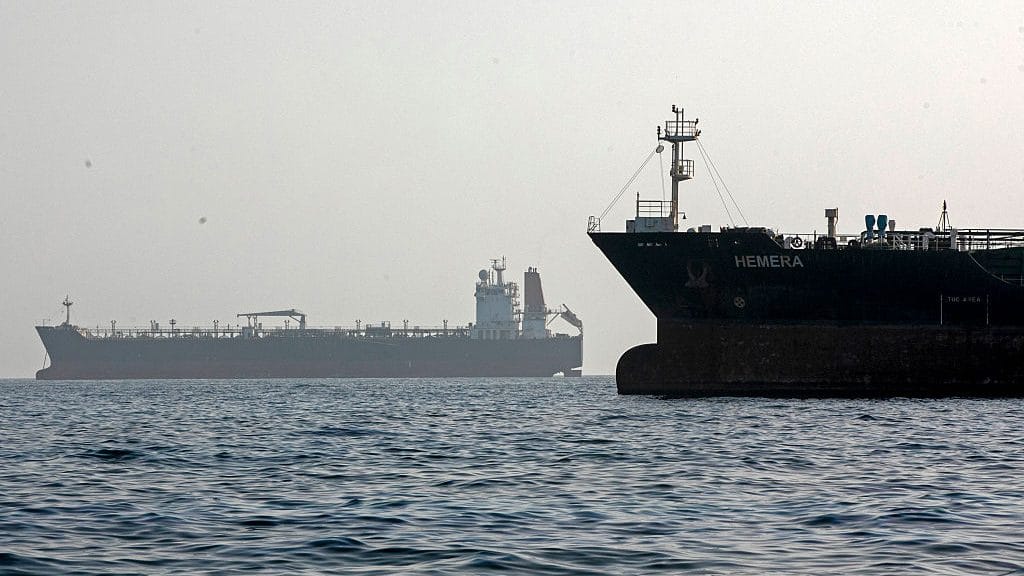
Anticipating an Oil Surge Post-Hormuz Reopening
The reopening of the Strait of Hormuz hinges on a diplomatic agreement between the U.S. and Iran, a deal that remains uncertain. However, let’s envision what might unfold once Tehran and Washington finalize an understanding that would allow tanker operations to resume at pre-conflict levels within approximately 30 days. While there are unresolved questions regarding potential tolls or the choice of shipping lanes, the impact of the strait's closure has been significant. The International Energy Agency reports that the blockade has forced oil-producing nations like Saudi Arabia, Iraq, and Iran to slash output by 45%, plummeting from about 32 million barrels per day to roughly 17.5 million.
Before oil exports can restart, the first task is navigating tankers through the congested waters of Hormuz into the Persian Gulf. Contrary to some beliefs, this won't be a phased operation; tankers already loaded will depart simultaneously with those awaiting cargo. Greek shipowners have strategically positioned several empty supertankers just days away from Hormuz, ready to step in. Additionally, securing war insurance is manageable, as various companies are offering it at reasonable rates. The critical factor will be establishing trust in the U.S.-Iran agreement, serving as a “proof of concept.” The most daring shipowners, such as Evangelos Marinakis and George Procopiou, will likely lead the charge, encouraging others to follow.
If the diplomatic framework holds, the logistics of mobilizing the necessary tankers will unfold more swiftly than expected. Although some ships may have been diverted for other business, including transporting crude from the U.S. Gulf to Japan, there remains ample capacity. Frontline Plc, a leading supertanker operator, estimates that 55 large tankers lie idle near the Persian Gulf, representing a capacity of 110 million barrels. According to CEO Lars Barstad, these vessels are reserved for major industry players rather than deployed elsewhere, as the opportunity cost of not being ready for a Hormuz reopening is substantial.
Once the transportation logistics are sorted out, the focus will shift to crude oil flow. Fortunately, the infrastructure, including around 10,000 wells and processing facilities, has largely escaped severe damage during the conflict, with repairs made during the ceasefire. This situation stands in stark contrast to past conflicts, such as the 1991 Gulf War, when oil wells were set ablaze. This time, Saudi Arabia and its neighbors had the luxury of orderly shutdowns, unlike the hasty closures in Venezuela that led to lasting damage.
Throughout the region, oil production hasn’t completely halted, as countries strive to meet domestic demand. Saudi Arabia and the UAE have even utilized pipelines bypassing Hormuz to maintain some output. Petroleum engineers have strategically managed well operations, rotating shutdowns to minimize downtime. By carefully regulating flows, they’ve kept a trickle of production active to prevent issues like pressure loss or clogging.
In the grand scheme, the Middle Eastern oil sector has not gone dormant; it has been kept in a state of readiness, eagerly awaiting peace. Once stability is restored, it’s anticipated that about 50% of the region's production capacity could come back online swiftly, with approximately 75% expected within weeks and full capacity achievable in a few months. Notably, Persian Gulf production was not operating at full capacity prior to the conflict, meaning it doesn't need to ramp back up immediately. OPEC+ quotas had constrained output, with Saudi Arabia producing only 10.4 million barrels a day, or about 83% of its capacity of 12.5 million.
Despite a decline in oil demand due to high prices and increased production from non-Middle Eastern sources, global supply and demand can stabilize without Persian Gulf oil returning to pre-war levels. Oil engineers are adept problem-solvers, and while the restart process post-Hormuz will pose challenges, it is far from impossible. When the time comes for the strait to reopen, the speed at which operations resume may come as a surprise.
Comments